On September 12, 2024, I dropped the kids off at school and headed out on what would turn out to be one of the most valuable days of professional development I have experienced, except this one wasn’t paid for by work. By the end of the day I would have a new appreciation for Social Infrastructure, and the way we build community in our cities.
What is Social Infrastructure you might ask? By definition, Social Infrastructure is “the system of organizations, spaces and experiences that enable people to connect with each other, the bridges necessary to build trust and civic participation, to create a sense of belonging and wellbeing. It’s the system that enables sustainable widespread community development.”
As it turned out, what started as a trip to make an award presentation at the Waterloo Region Community Foundation‘s Do More Good Dialogue Event, where they would be presenting the Ken Murray Award, ended up being a hands-on day of learning all about Social Infrastructure, and the ways we weave the fabric of community, culminating with a keynote presentation by Kristyn Feldman, Director of Weave: The Social Fabric Project, followed by a panel discussion with Diego Almaraz and Ola Mise.
While I could have worked a half day, and headed up around lunch time, I took this invitation as an opportunity to make a day trip and visit some of the organizations The Ken Murray Fund has been able to support.
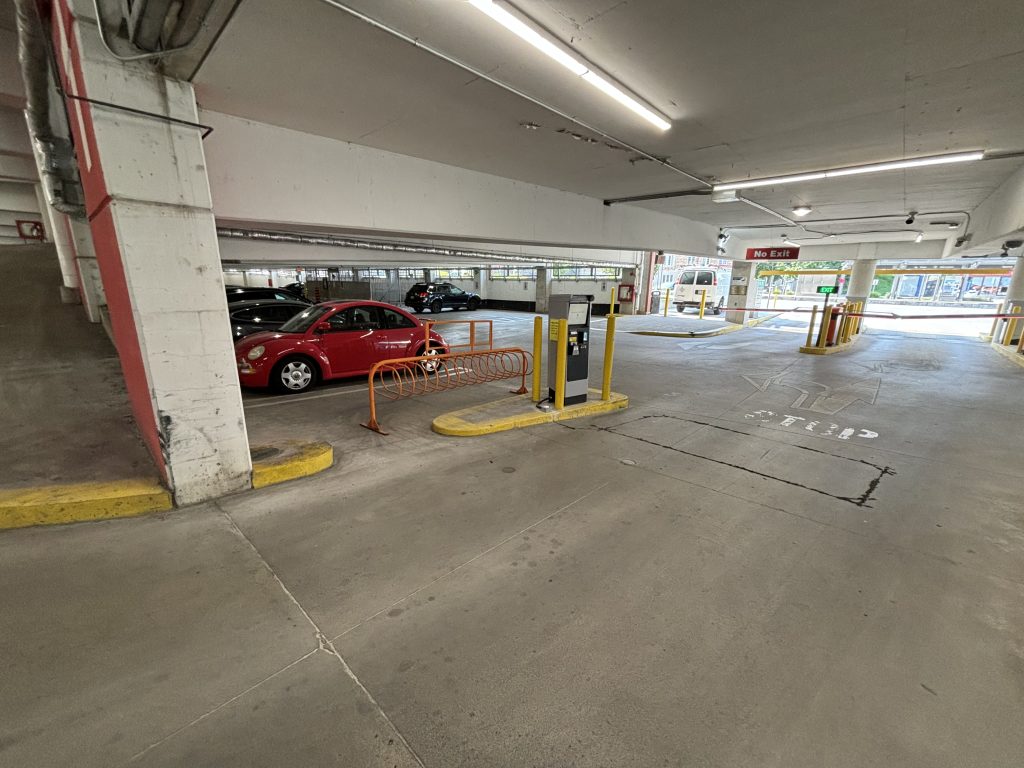
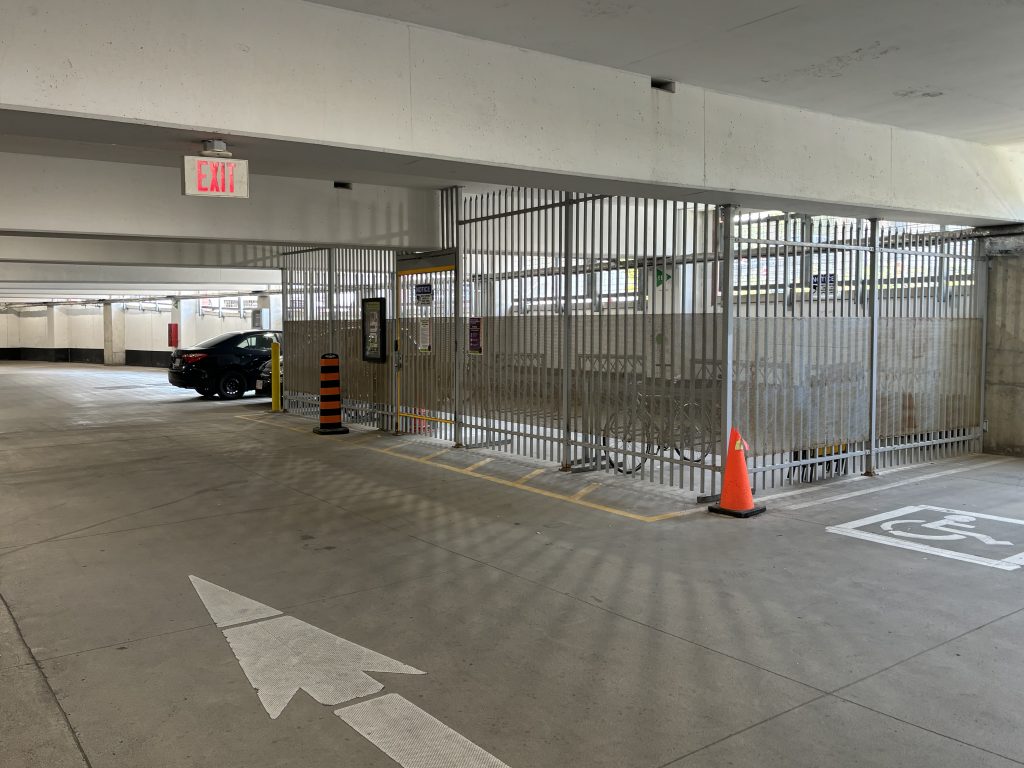
Arriving in downtown Kitchener I was pleasantly surprised to see their LRT system, but also a surprising lack of bike lanes. However, I parked my car and immediately noticed a bike rack located in the parking garage in a highly visible area next to the exit gate, as well as a secure bike parking facility. This bike parking area only took up 4 vehicle spots but could easily hold 30-40 bikes.
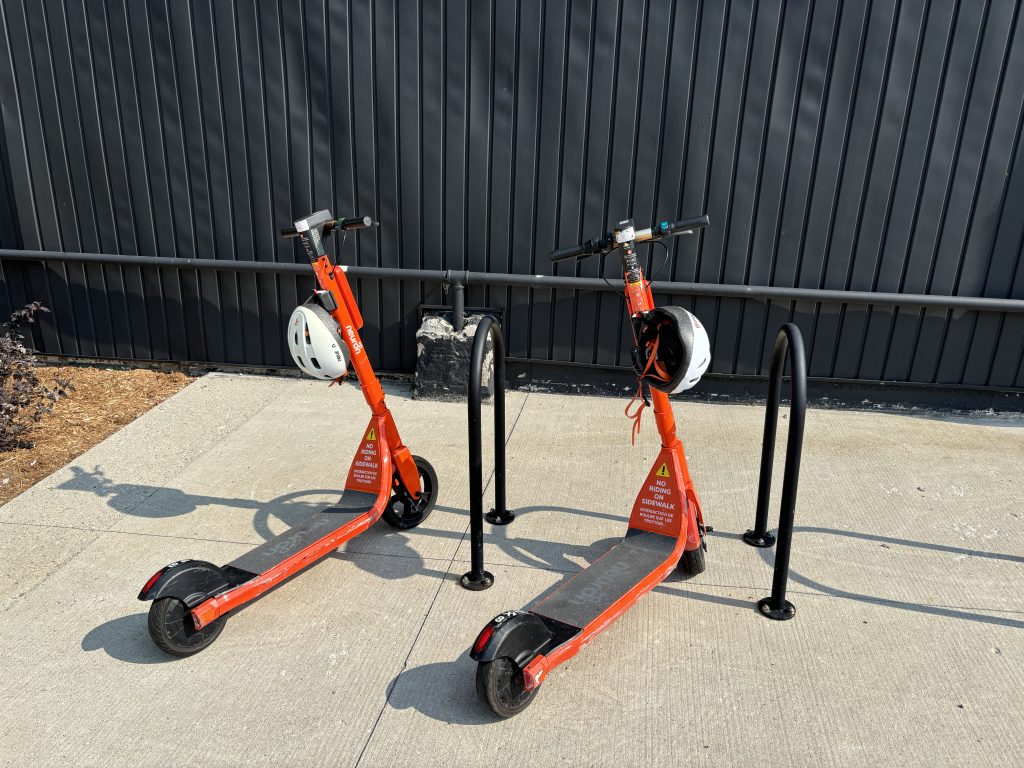
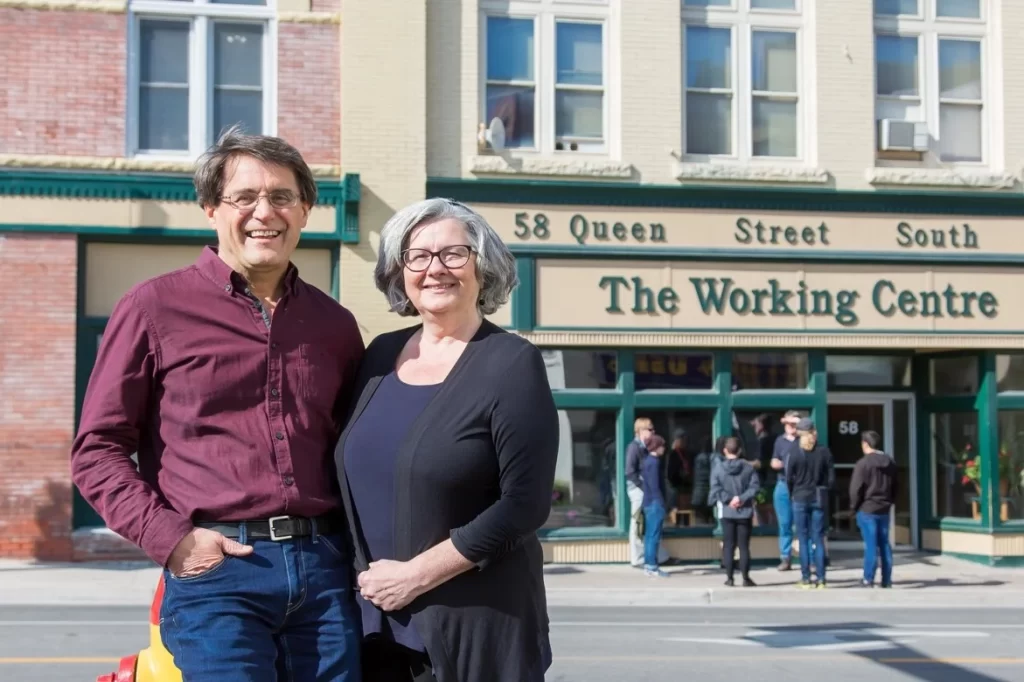
On my way to my first stop, The Working Centre, I noticed some e-scooters you could rent, as I made the quick walk up and across the street. There I entered The Working Centre’s Employment Resource Centre. It was a busy place filled primarily with new Canadians who were looking for assistance getting work. I was greeted warmly, as was everyone who entered, and exchanged warm smiles with anyone I met eyes with. Soon I met with The Working Centre’s Executive Driection, Joe Mancini, a long time friend of my grandfather’s and he gave me a tour of the rest of the building.
Seeing their commercial kitchen which provides over 700 meals a day to people across the region, before heading upstairs to see their low cost apartments. From there we headed across the street to the first of their cafes which was under construction, and while full of dust and construction materials, you could sense the warmth and sense of community that was felt at the Employment Centre.
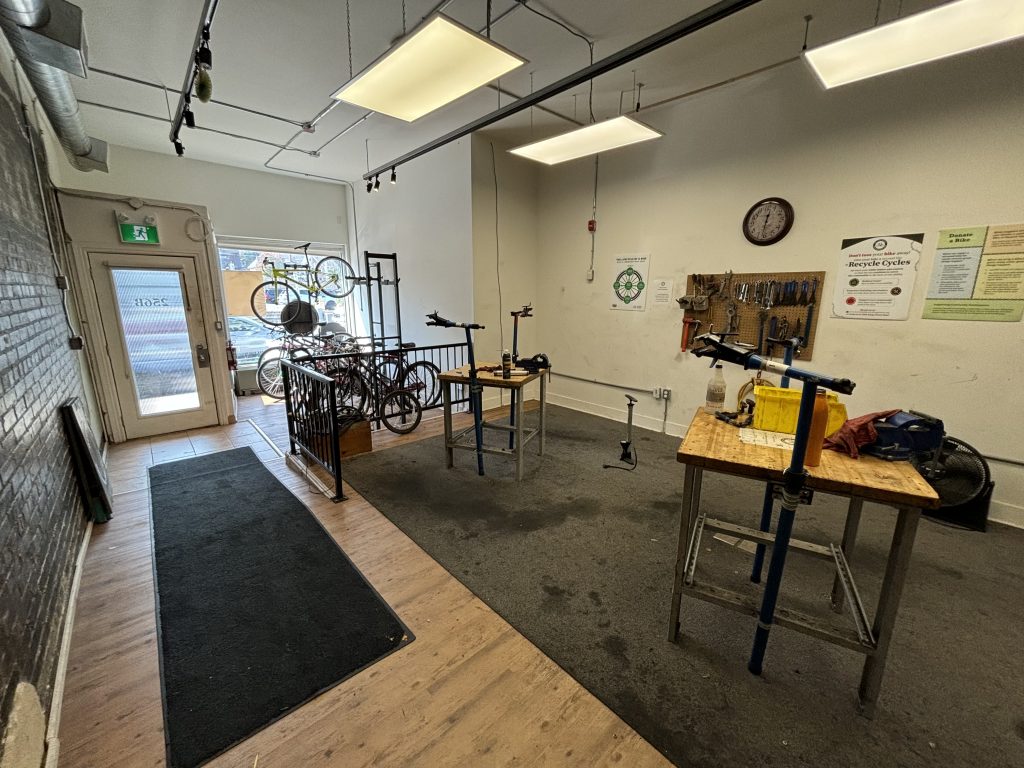
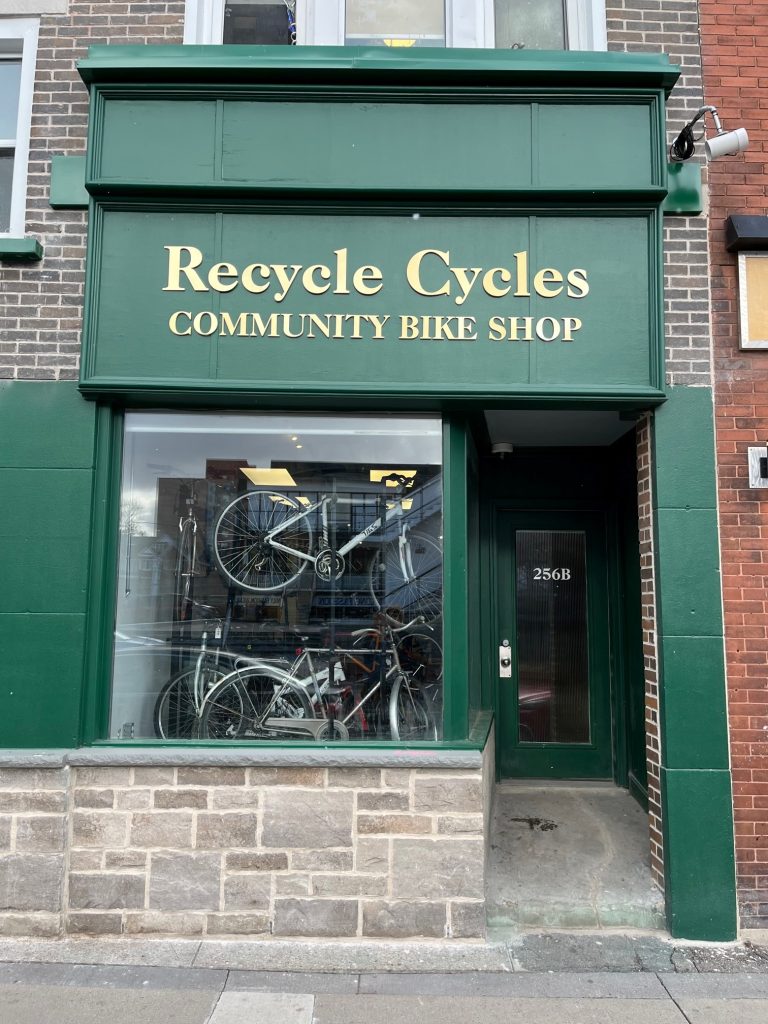
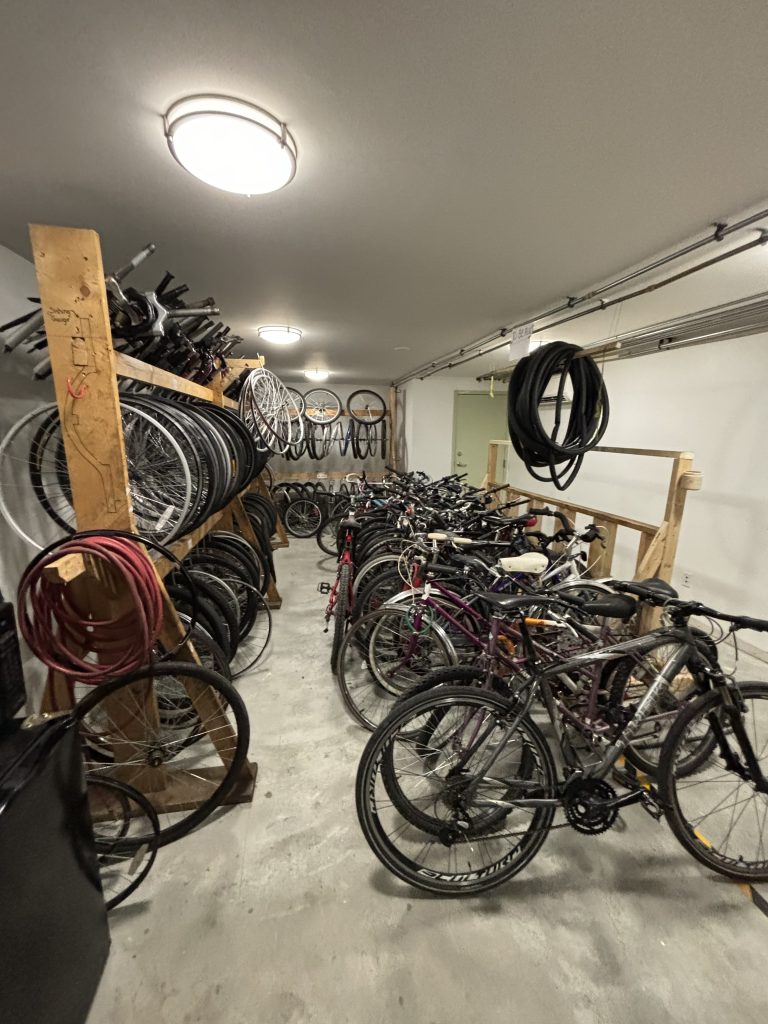
From there we headed down the street to my main area of interest, Recycle Cycles, a community bike shop owned by The Working Centre. The shop was tended by a friendly recent university grad named Bart. While standing in the main retail and DIY Workshop, he explained all about the shop, and the number of bike donations they received just that morning. From there, Joe and I ventured into the basement and saw the staff work areas, and their deep storage that seemed never ending. Hundreds of bikes, parts, and accessories all organized and ready to go for the winter season.
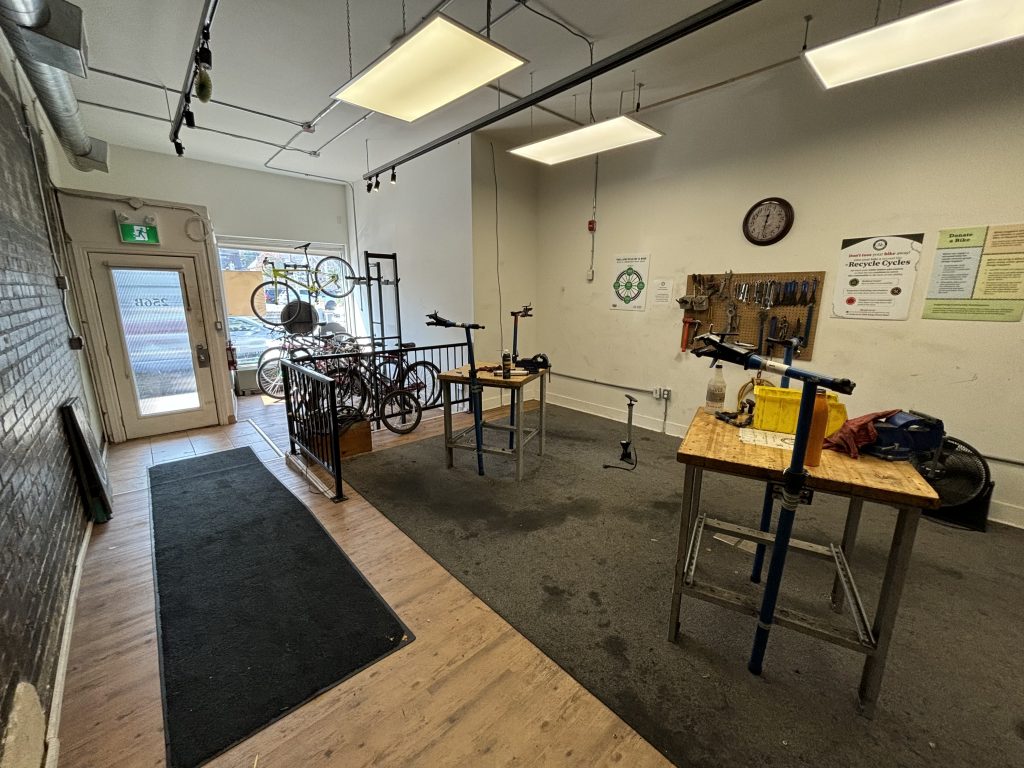
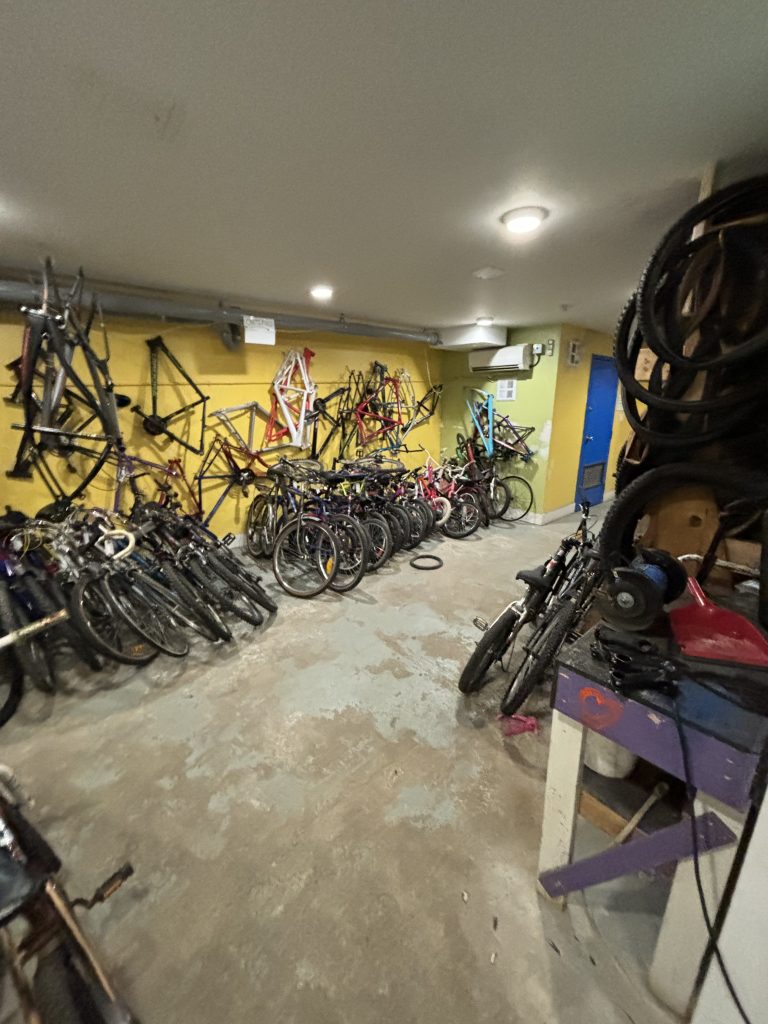
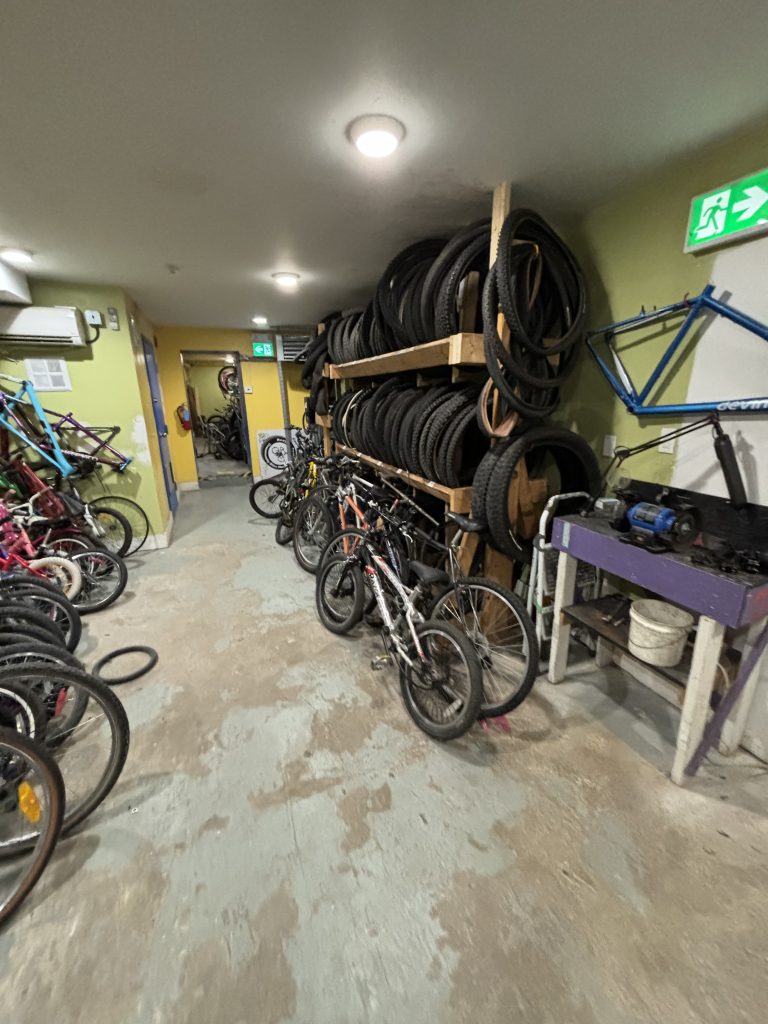
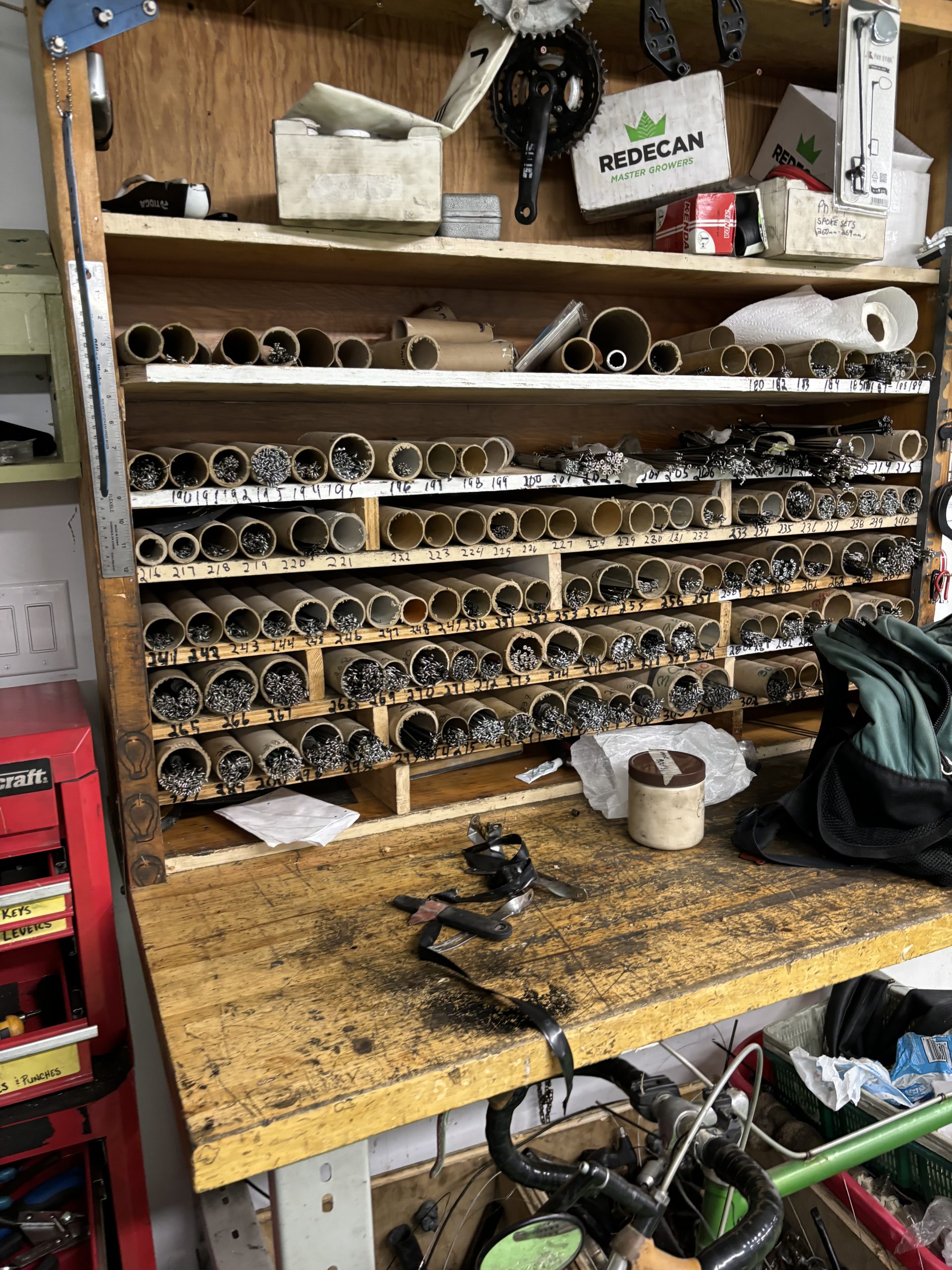
Bart explained that while the spring and summer were busy with tune ups and repairs, fall and winter were busy with bike builds and overhauls to prepare for the next spring. We then went back upstairs where we saw someone come in and borrow some tools to fix up their bike, and Bart greeted them, asked if they needed any assistance,
Finishing there we passed through a door connecting the bike shop to another café and commercial kitchen space which would be opening in the next week. This café will be more vegan/vegetarian focused, and the kitchen will prepare the food/baked goods for both cafes leaving the first space to focus on meals. We exited the building and being short on time, only passed by Worth A Second Look, their used furniture and housewares store.
I’m thankful for the few hours that Joe showed me around, it was great to see how the organization fully encircles someone’s life. From providing housing, to furnishing that apartment, to helping someone find a job, and providing meals. The Working Centre is an all encompassing organization.
A Visit to wilfrid laurier’s music department
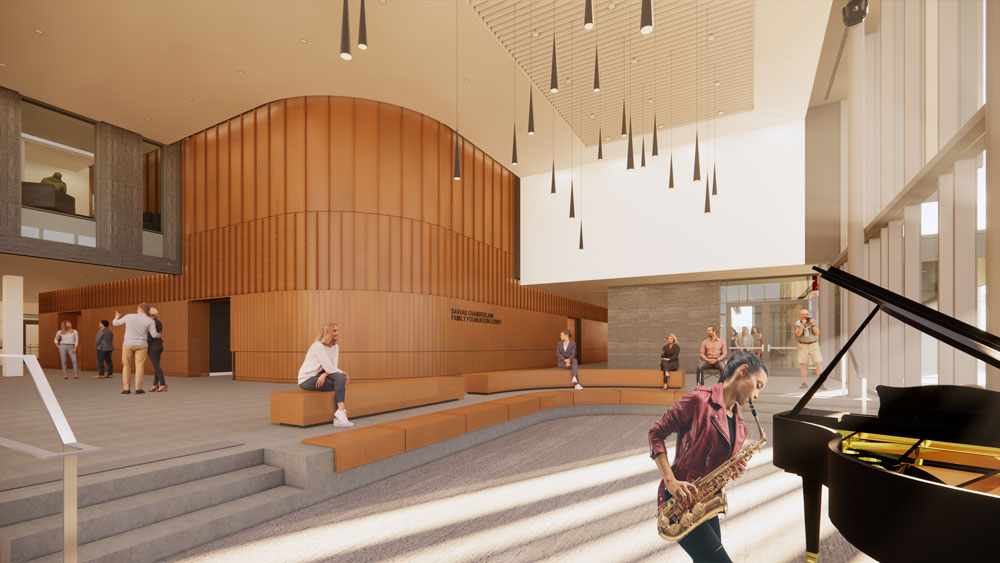
From there I headed up to Wilfrid Laurier University to meet with my friend and colleague Kathryn Jeffery. The Ken Murray Fund was able to support a new practice room in the newly renovated music department. What was once dark and dated practice rooms, are now bright, and welcoming spaces where students would want to come. From there we sat and talked over iced tea and chatted about the university and how the Ken Murray Fund has supported the university and how it might look going forward.
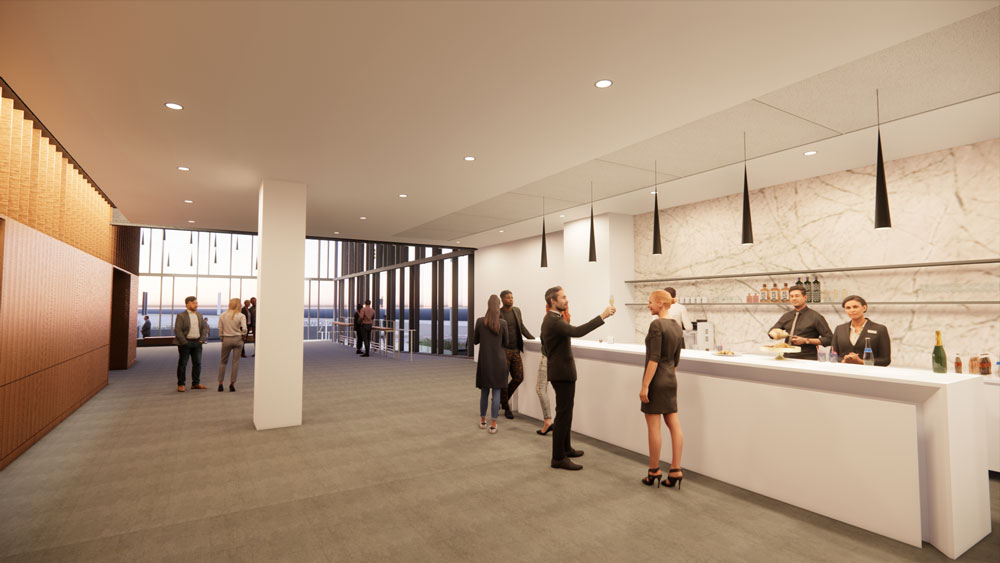
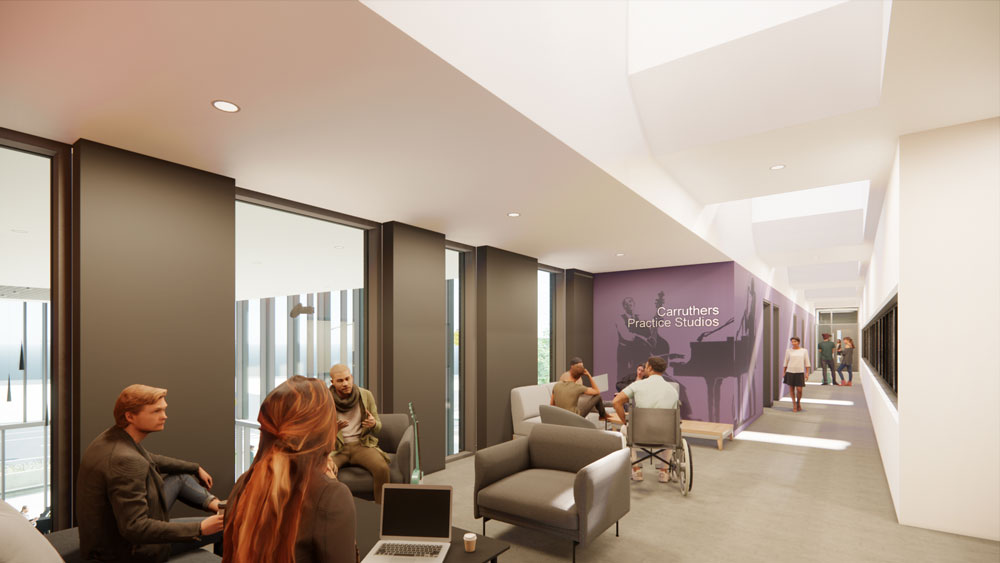
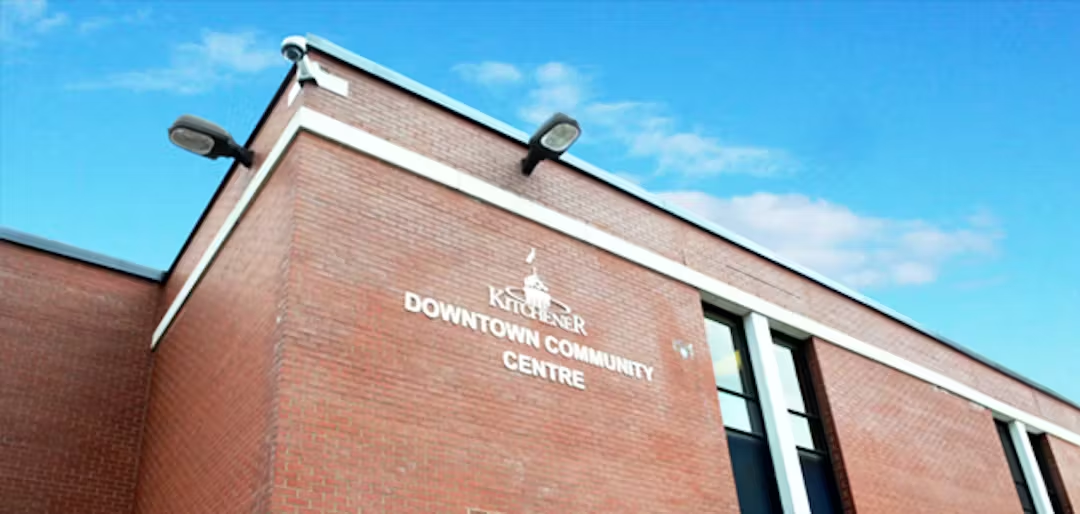
Having a little bit of time before my event with the Community Foundation, I did a quick search and found the Downtown Community Centre, working in recreation, I thought it would be interesting to see what other communities are doing. I was greeted again by some friendly front desk staff, and we talked shop about all things recreation. What we do that is the same, what is different, and our shared struggles. While there I noticed how they leverage community groups to respond to the programming wants/needs directly from the community, and how their fee structure values participation and engagement over cost-recovery.
insights from the ‘do more good dialogue’ event
From there I headed off to the event with the Community Foundation, over at Catalyst 137. I parked and entered the sprawling building, which housed a number of tech start-ups and key anchor tenants. What from the outside seemed vast, was surprisingly cozy once you got inside.
It was great to see old friends and colleagues and make some new connections. Kristyn’s keynote about Weavers made me reflect on my own position in the community, and how I can improve in connecting people, and creating inviting spaces for people to connect. She was then joined on stage by two local experts, Diego and Ola. It was interesting to hear their thoughts on Kristyn’s talk, as well as their ideas on social infrastructure, and how we weave the fabric of society.
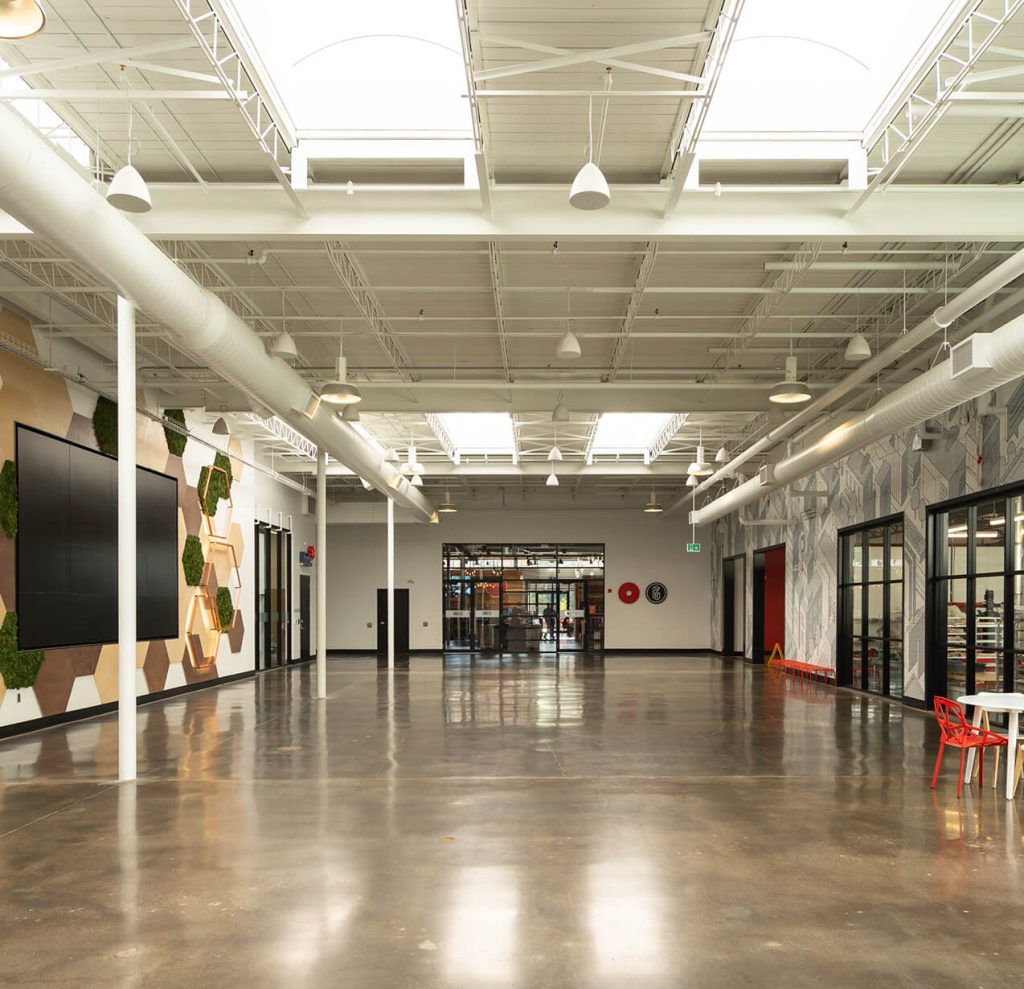
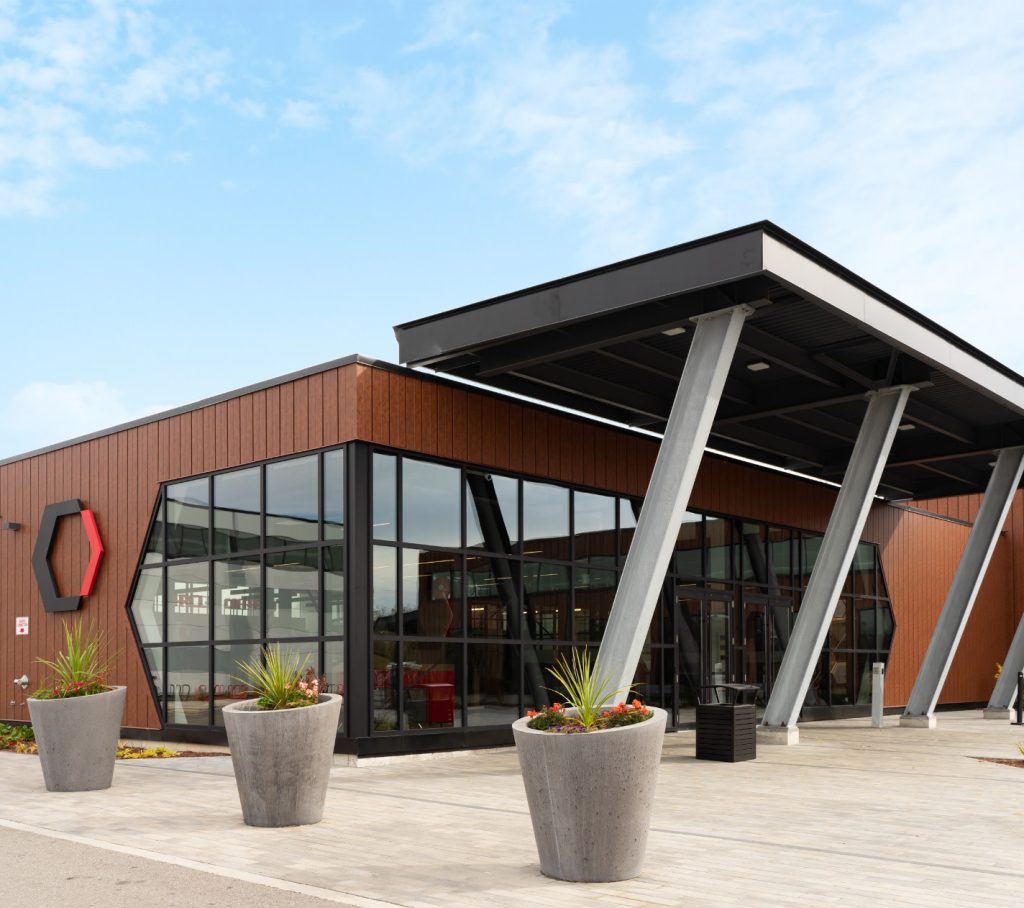
As the event wrapped up, I felt energized and inspired. I said some goodbyes, and headed to my car, noticing the warmth from the sun setting over the horizon. As I drove home I realized warmth had been the theme tying all the events together. Everywhere I went I noticed it. From the weather, to the greetings, the smiles, the thankfulness. It is something I hope I can bring back to Niagara in my own small way, and encourage you to show warmth whenever you can.
While reflecting on my time in Kitchener-Waterloo, I noticed how the Music Department at Laurier considered having space for people with different backgrounds, and in different fields of study can gather even in what is traditionally the ‘music space’. How The Working Centre created space in their cafes for people to belong and feel welcomed, and how the Community Foundation and Catalyst 137 created spots for casual interactions during their event.
As I mentioned early on, the Waterloo Region Community Foundation has put a focus on funding Social Infrastructure in its strategic plan, and part of that is recognizing three types of specific spaces in our communities, which authors Kimberly C. Driggins & Bridget Marquis wrote about in an article for Planning Magazine.
They talked about how Hubs, Havens and Hangouts are all important spaces for members of the community to engage and to build trust and reduce the social isolation that has become all too prevalent in society.
Hubs
Places that intentionally encourage people to interact with others from different backgrounds, where diverse social networks and “bridging social capital” is created.
havens
Places for people to gather around a shared identity and similar backgrounds, safe places to belong and to build close ties and “bonding social capital” in a communal space.
hangouts
Places that support casual interactions, where people can just be. These are places for simply “hanging out” that provide opportunities for people to live life in public.
The article also provided four tips to increase social infrastructure, and reduce social isolation:
- Notice what is working and build on strength
- Map the network and identify gaps
- Recognize what is not working and test new ideas
- Adopt social connection as an outcome and measure
Working through these 4 steps will be my challenge here in St. Catharines, and I can already see areas of success, and also areas for improvement. The key will be to link the stakeholders and help them see how we can create a stronger community through the lens of social infrastructure.